
guide
Understanding Equipment Financing: Loans, Leases, Terms, and Ownership Costs
Learn how equipment financing works, what lenders review, and how loans, leases, down payments, rates, and payment terms affect ownership decisions.
Introduction
Equipment financing helps businesses acquire assets without paying the full purchase price upfront. It can support growth, replace aging equipment, improve productivity, or preserve cash for other needs.
But financing is more than a monthly payment. Owners should understand loan structures, lease options, down payments, interest, fees, collateral, insurance, and total cost before signing.
This guide explains the basics of equipment financing.
What Is Equipment Financing?
Equipment financing is funding used to acquire business assets.
It may be used for:
- Vehicles
- Machinery
- Construction equipment
- Manufacturing equipment
- Medical devices
- Technology equipment
- Tools
- Trailers
The equipment often serves as collateral, which can make financing more accessible than unsecured borrowing.
Common Financing Structures
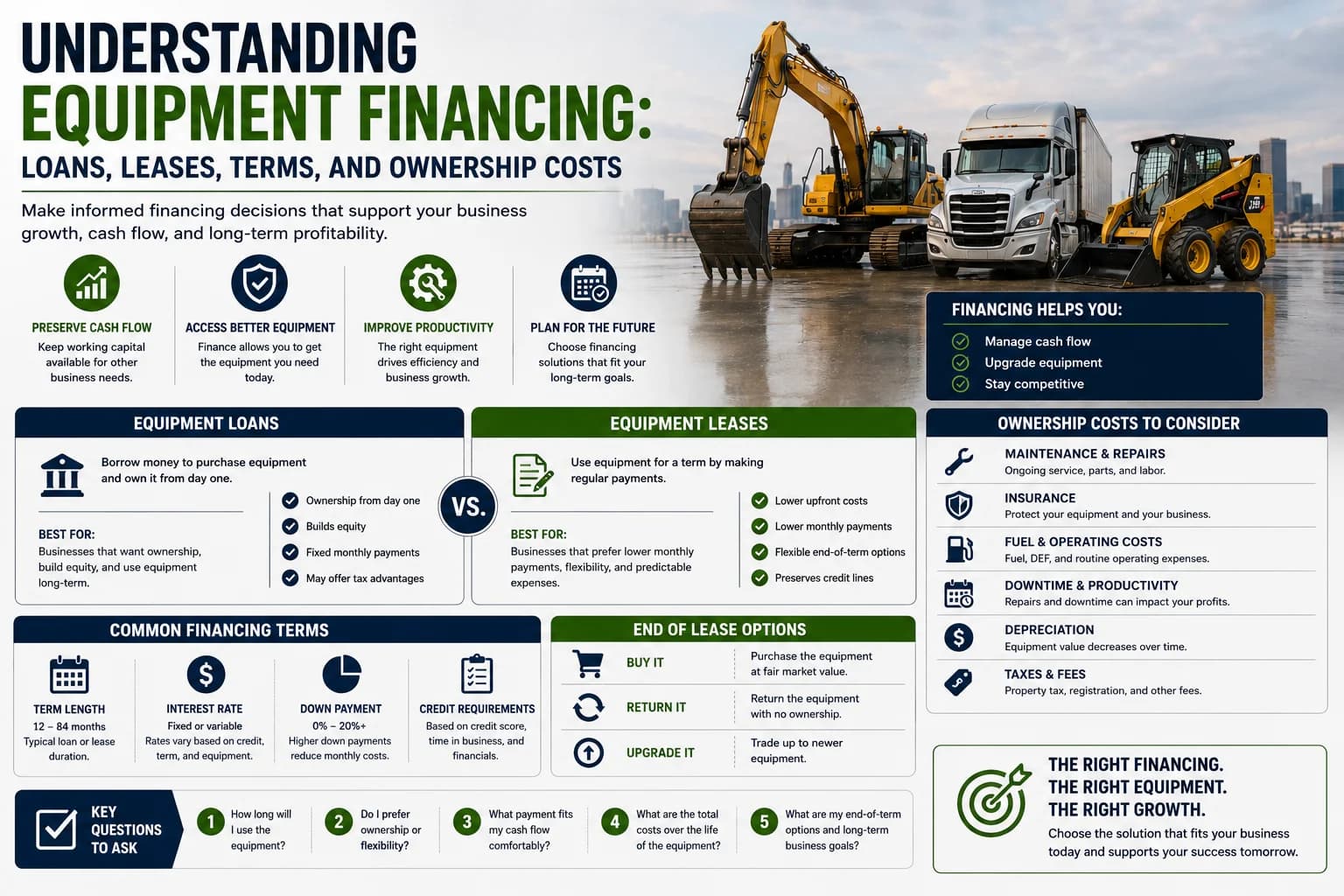
Equipment Loan
The business borrows money to purchase equipment and repays it over time.
Finance Lease
The business makes payments with a path to ownership or buyout.
Operating Lease
The business uses the equipment for a period and may return it at the end.
Line of Credit
A flexible credit line may support smaller or repeated purchases.
Vendor Financing
Dealers or vendors may offer financing through partner lenders.
What Lenders Review
Lenders often evaluate:
- Business revenue
- Time in business
- Bank statements
- Personal and business credit
- Existing debt
- Equipment type
- Equipment value
- Down payment
- Industry risk
- Cash flow
The stronger the business profile, the more options may be available.
Important Financing Terms
Understand these terms before signing:
- Principal
- Interest rate
- Term length
- Payment frequency
- Down payment
- Fees
- Collateral
- Personal guarantee
- Balloon payment
- Buyout option
Small differences in terms can significantly affect total cost.
Match Financing to Cash Flow
Payments should fit the business's revenue pattern.
Consider:
- Seasonal revenue
- Project timing
- Expected utilization
- Maintenance costs
- Insurance costs
- Slow months
Affordable payments matter more than simply getting approved.
New vs Used Equipment Financing
New equipment may offer:
- Warranty coverage
- Longer useful life
- Easier financing
- Higher cost
Used equipment may offer:
- Lower purchase price
- Faster payback
- More condition risk
- Possible appraisal requirements
Financing should reflect the asset's condition and expected use.
Total Cost of Financing
Look beyond monthly payment.
Total cost may include:
- Down payment
- Interest
- Fees
- Insurance
- Maintenance
- Repairs
- Taxes
- Registration
- End-of-term costs
The cheapest payment is not always the lowest-cost option.
Common Mistakes
Avoid these issues:
Focusing Only on Payment
Term length can make payments look low while increasing total cost.
Ignoring Maintenance
Equipment must be maintained while payments continue.
Not Reading End-of-Term Terms
Leases can include return conditions, buyouts, or fees.
Financing Equipment Without a Use Plan
Utilization drives value.
Equipment Financing Checklist
Before signing, review:
- Equipment purpose
- Purchase price
- Financing structure
- Down payment
- Interest rate
- Term length
- Fees
- Insurance requirement
- Maintenance budget
- End-of-term options
- Expected ROI
Clear documentation improves decision-making.
Conclusion
Equipment financing can help businesses acquire important assets while preserving cash, but the structure matters. By understanding lender requirements, payment terms, ownership costs, and end-of-term obligations, owners can choose financing that supports the business instead of straining it.
The best financing decision matches equipment value, cash flow, and long-term operational need.