
guide
How Equipment Age and Condition Affect Insurance Coverage
Learn how equipment age, maintenance, condition, obsolescence, and valuation may influence underwriting, limits, premiums, and claim settlements.
Introduction
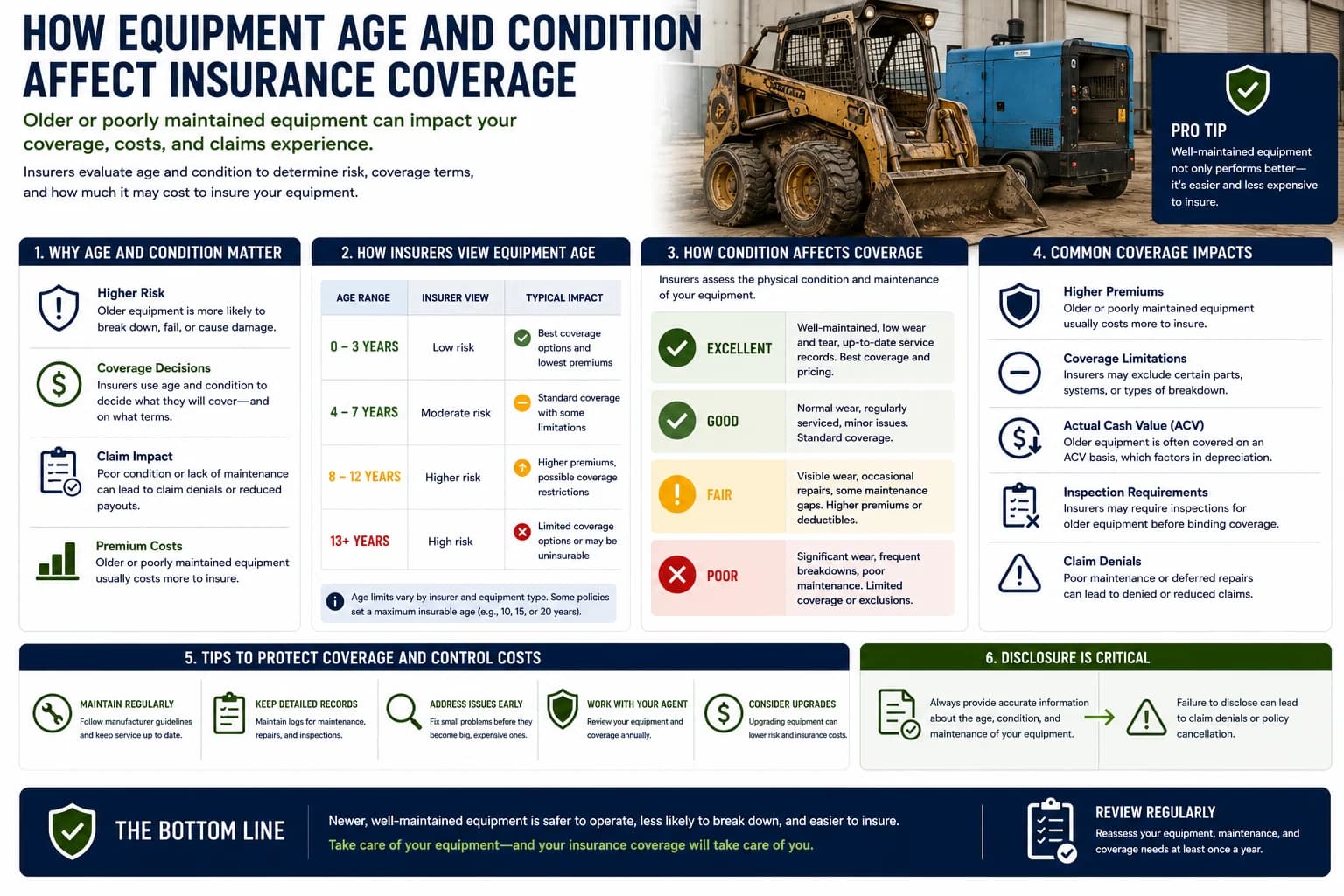
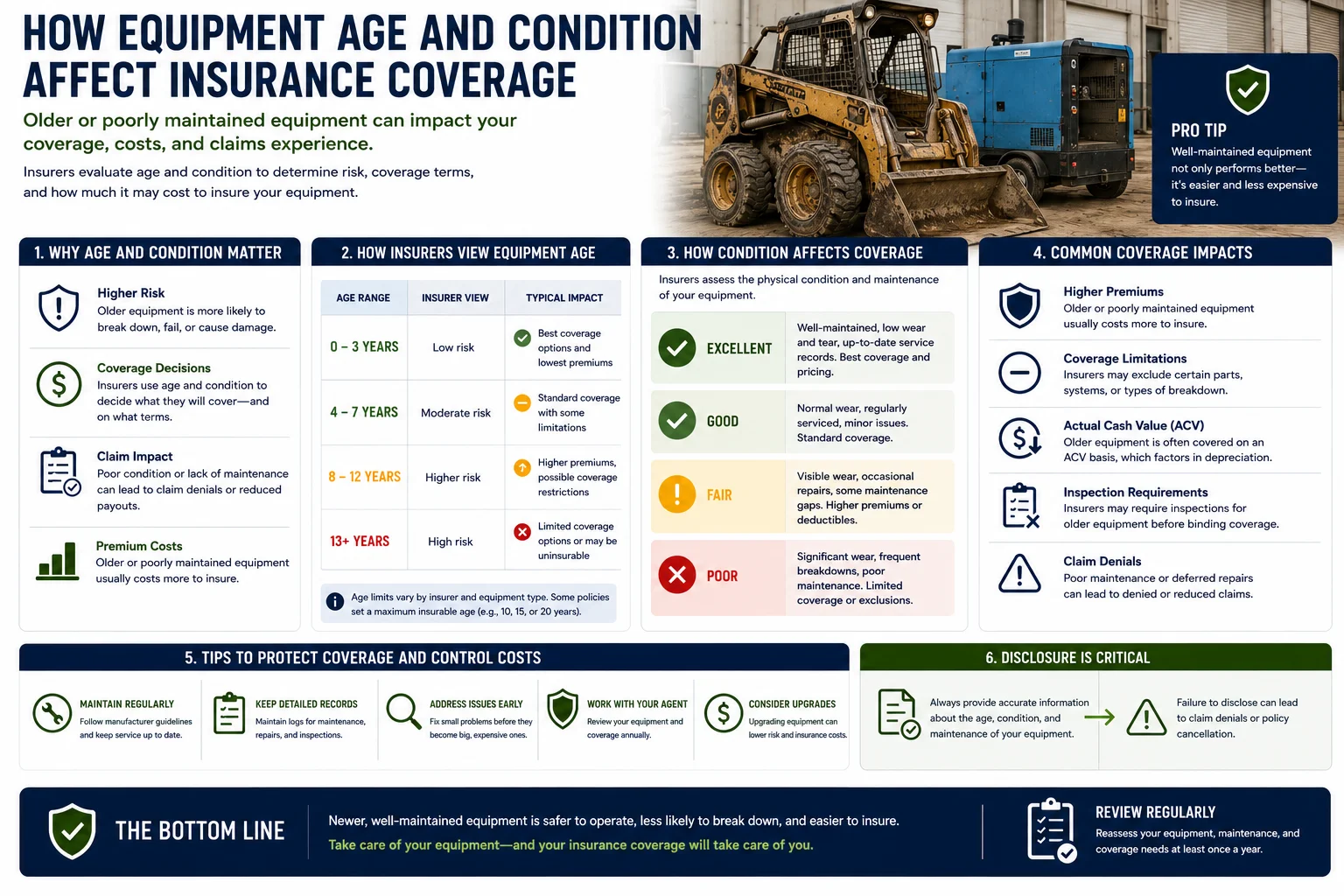
Two pieces of equipment with the same model name can present very different insurance risks. One may be recently purchased, well maintained, and fully documented. The other may be older, heavily used, difficult to repair, and missing service records.
Equipment age and condition can influence how insurers evaluate risk, what valuation method applies, which inspections are required, and how a covered loss is settled.
This article provides general educational information. Insurance practices vary by insurer and policy. Consult a licensed insurance professional.
Why Age Matters
As equipment ages, it may become:
- More likely to fail
- More expensive to repair
- Harder to obtain parts for
- Less valuable in the resale market
- More technologically obsolete
Age alone does not determine insurability, but it can affect underwriting and valuation.
Why Condition Matters
Condition reflects how equipment has been used and maintained.
Insurers or appraisers may consider:
- Visible wear
- Corrosion
- Structural damage
- Leaks
- Safety-system condition
- Maintenance history
- Repair quality
- Operating environment
Well-maintained older equipment may present a better risk than neglected newer equipment.
Actual Cash Value and Depreciation
Older equipment is often more affected by actual-cash-value settlements.
Factors may include:
- Original cost
- Age
- Useful life
- Condition
- Market value
- Obsolescence
The amount needed to buy a replacement can be higher than the depreciated value of the damaged asset.
Replacement Cost Limitations
Replacement cost coverage may include conditions.
The policy may require:
- Actual replacement within a set period
- Comparable equipment
- Accurate declared values
- Compliance with policy reporting requirements
Some older equipment may be insured on a different basis if direct replacement is impractical.
Maintenance and Insurability
Insurers may ask about maintenance for high-value or specialized equipment.
Useful records include:
- Preventive maintenance schedules
- Service logs
- Inspection reports
- Repair invoices
- Technician findings
- Calibration records
- Rebuild documentation
These records help show that deterioration was managed rather than ignored.
Obsolete or Unsupported Equipment
Obsolete equipment can create special challenges.
Potential issues include:
- Discontinued parts
- Limited repair vendors
- Unsupported control systems
- Long downtime
- No direct replacement model
Businesses should discuss how the policy values equipment that cannot be replaced with an identical model.
Updating Insured Values
Equipment values can change because of:
- Inflation
- Supply shortages
- Major rebuilds
- Added attachments
- Market demand
- Technological obsolescence
Insurance schedules should be reviewed regularly rather than relying on the original purchase price forever.
Preparing Condition Records
Maintain:
- Current photos
- Serial number photos
- Meter readings
- Inspection results
- Service history
- Upgrade records
- Major repair invoices
- Current replacement estimates
Condition records are most useful when created before a loss.
Common Mistakes
Avoid:
Insuring at Original Cost Only
Original cost may not reflect current replacement cost or value.
Missing Maintenance Records
Undocumented service history can create uncertainty.
Ignoring Major Upgrades
Rebuilds and attachments may change value.
Leaving Retired Equipment Scheduled
Insurance records should match active assets.
Conclusion
Equipment age and condition can influence underwriting, valuation, and claim outcomes. Accurate maintenance records, current photos, and updated values help insurance professionals understand the asset more clearly.
Businesses should review older, rebuilt, or obsolete equipment individually and confirm how each asset would be valued after a covered loss.