
guide
Financing Heavy Equipment: What Owners Should Know Before Signing
Learn how heavy equipment financing works, what lenders review, and how to plan for payments, insurance, liens, maintenance, and ownership costs.
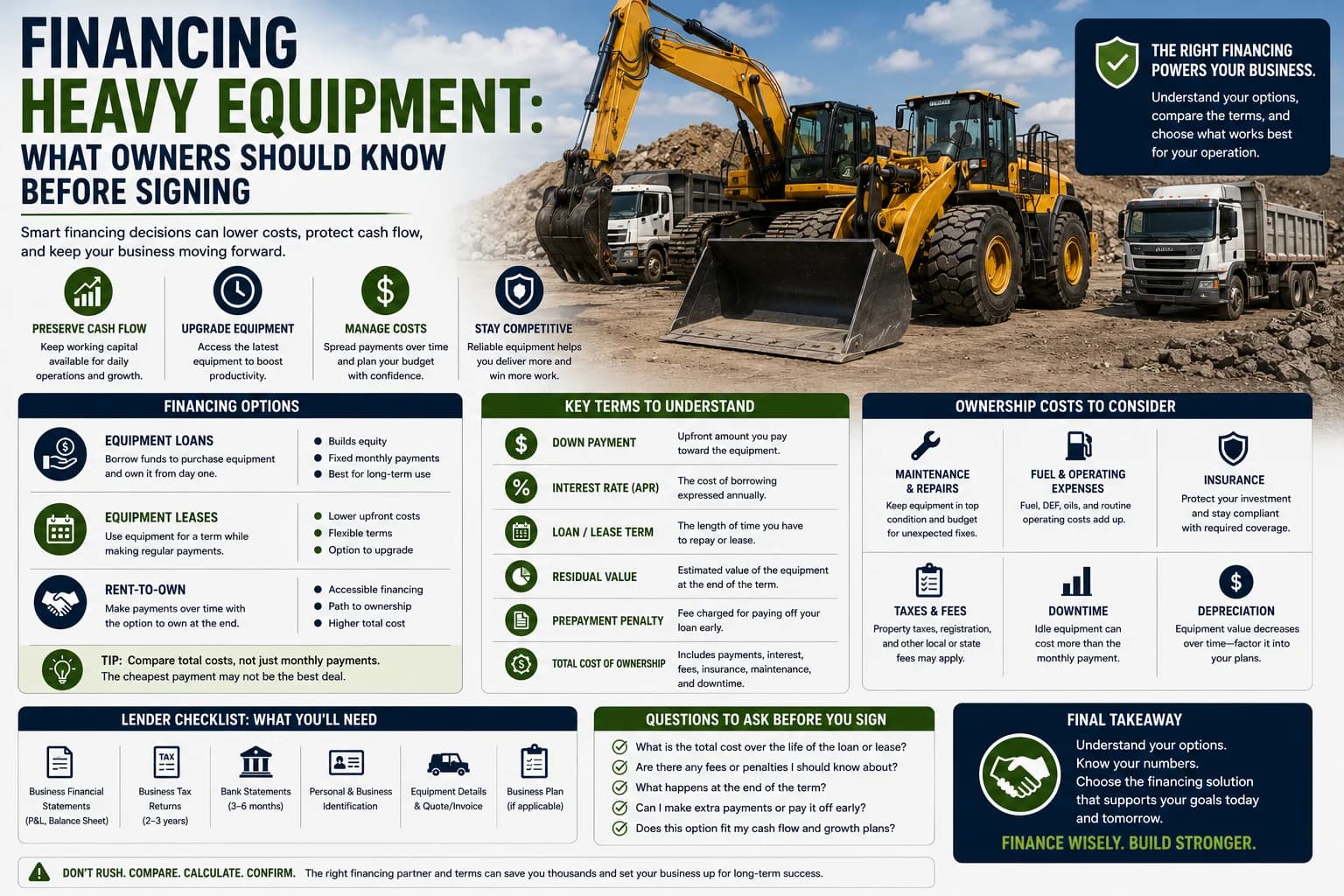
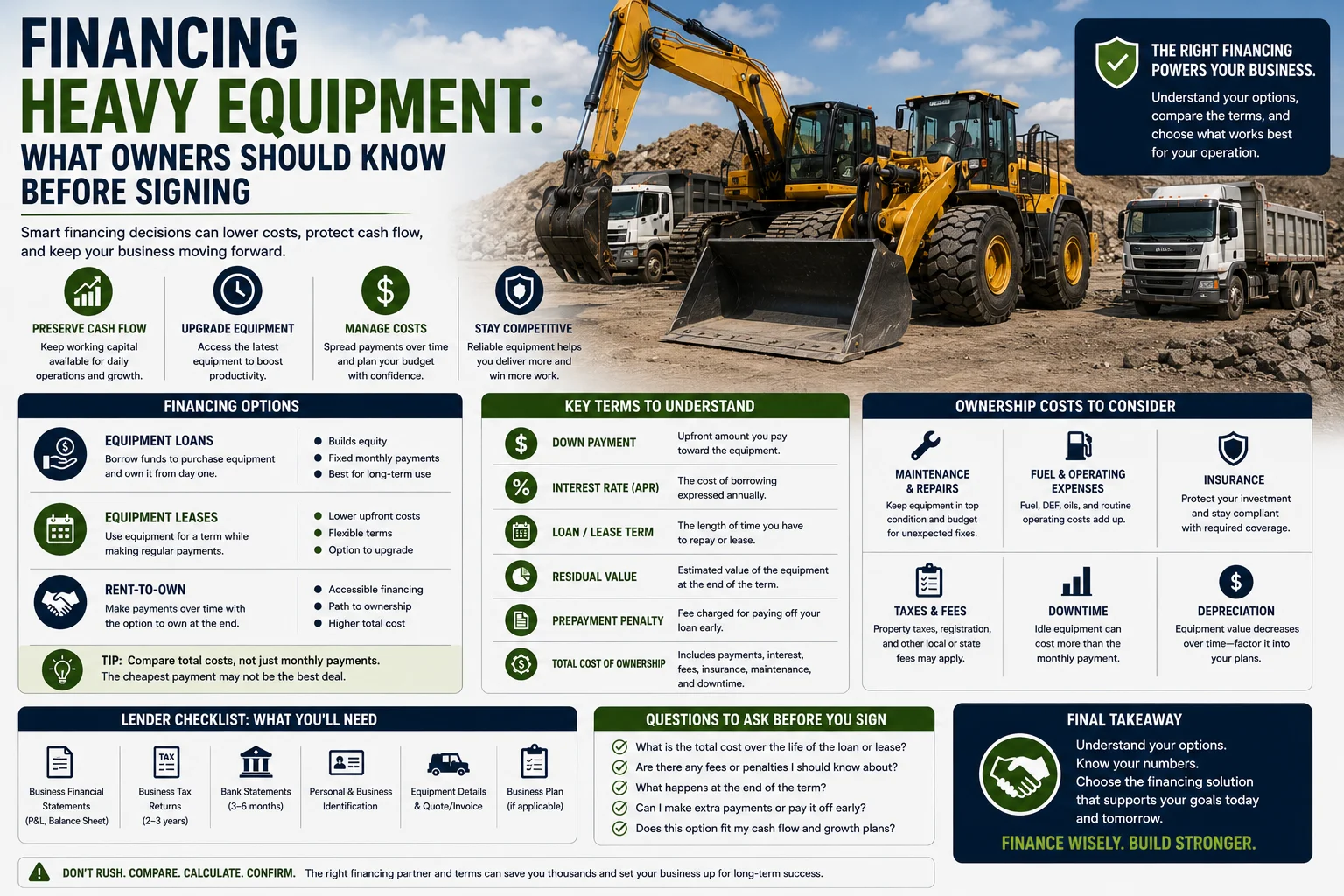
Introduction
Heavy equipment purchases can require significant capital. Excavators, loaders, dump trucks, tractors, cranes, pavers, and other high-value assets often cost far more than everyday tools or shop equipment.
Financing helps businesses acquire heavy equipment while spreading payments over time. However, the size, collateral value, maintenance needs, and resale market for heavy equipment make financing decisions especially important.
This guide explains key considerations before financing heavy equipment.
Why Heavy Equipment Financing Is Different
Heavy equipment often has:
- Higher purchase prices
- Longer useful lives
- Strong resale markets
- Significant maintenance costs
- Transportation requirements
- Insurance requirements
- Title or lien considerations
Lenders evaluate both the borrower and the equipment because the asset may serve as collateral.
Common Financing Options
Equipment Loan
The business buys the equipment and repays the loan over time. The lender may hold a lien until payoff.
Finance Lease
Payments are spread over a term with a possible buyout option.
Operating Lease
Useful when the business wants use of the equipment without long-term ownership.
Dealer or Vendor Financing
Some sellers offer financing directly or through lending partners.
Line of Credit
May work for smaller attachments or multiple purchases, depending on terms.
What Lenders Review
Heavy equipment lenders may evaluate:
- Business revenue
- Time in business
- Credit history
- Bank statements
- Existing debt
- Equipment type
- Purchase price
- Age and condition
- Down payment
- Resale value
Used equipment may require additional condition details or appraisal information.
Understand the Total Cost
The payment is only one part of the cost.
Plan for:
- Insurance
- Maintenance
- Repairs
- Fuel
- Transport
- Storage
- Attachments
- Registration or permits
- Operator training
Heavy equipment can create value, but only when the full ownership cost is understood.
Watch for Liens and Titles
Before buying used heavy equipment, confirm ownership and lien status.
Important records include:
- Bill of sale
- Title if applicable
- UCC lien search
- Payoff documentation
- Lien release
- Serial number verification
Financed equipment should have clear records showing who holds the lien and how payoff is handled.
Match Payments to Cash Flow
Many heavy equipment businesses are seasonal.
Consider:
- Busy season revenue
- Slow season cash flow
- Down payment timing
- Payment frequency
- Balloon payments
- Maintenance cycles
Payments should fit the business, not just the purchase date.
Maintenance Matters to Lenders
Equipment condition affects collateral value.
Keep records for:
- Preventive maintenance
- Repairs
- Inspections
- Hour-meter readings
- Oil changes
- Major component work
Strong maintenance records can support resale value and future financing.
Common Heavy Equipment Financing Mistakes
Avoid these issues:
Ignoring Transport Costs
Moving heavy equipment can be expensive.
Financing More Than Needed
The largest machine is not always the best business fit.
Missing Insurance Requirements
Funding may be delayed without proper coverage.
Overlooking Used Equipment Condition
Cheap equipment can become expensive if repairs start immediately.
Forgetting Lien Releases
Clear payoff documentation matters when equipment is sold later.
Heavy Equipment Financing Checklist
Before signing, review:
- Equipment quote or invoice
- Serial number
- Condition and hours
- Financing terms
- Down payment
- Insurance requirements
- Lien holder details
- Payment schedule
- Maintenance budget
- Expected revenue use
- Exit or resale plan
Documenting these details supports better ownership decisions.
Conclusion
Financing heavy equipment can help businesses grow capacity without paying the full purchase price upfront. But the decision should account for more than monthly payments.
By reviewing total ownership cost, equipment condition, lender requirements, lien details, and maintenance obligations, owners can finance heavy equipment with better visibility and fewer surprises.