
guide
Equipment Inventory Audits: Why They Matter and How to Conduct Them
Learn why equipment inventory audits matter and how to verify asset locations, assignments, condition, status, and inventory accuracy.
Introduction
No matter how organized your business may be, inventory records naturally become inaccurate over time. Equipment gets moved between locations, assigned to different employees, sent for repairs, retired from service, or simply misplaced. Without regular verification, asset records can quickly become outdated.
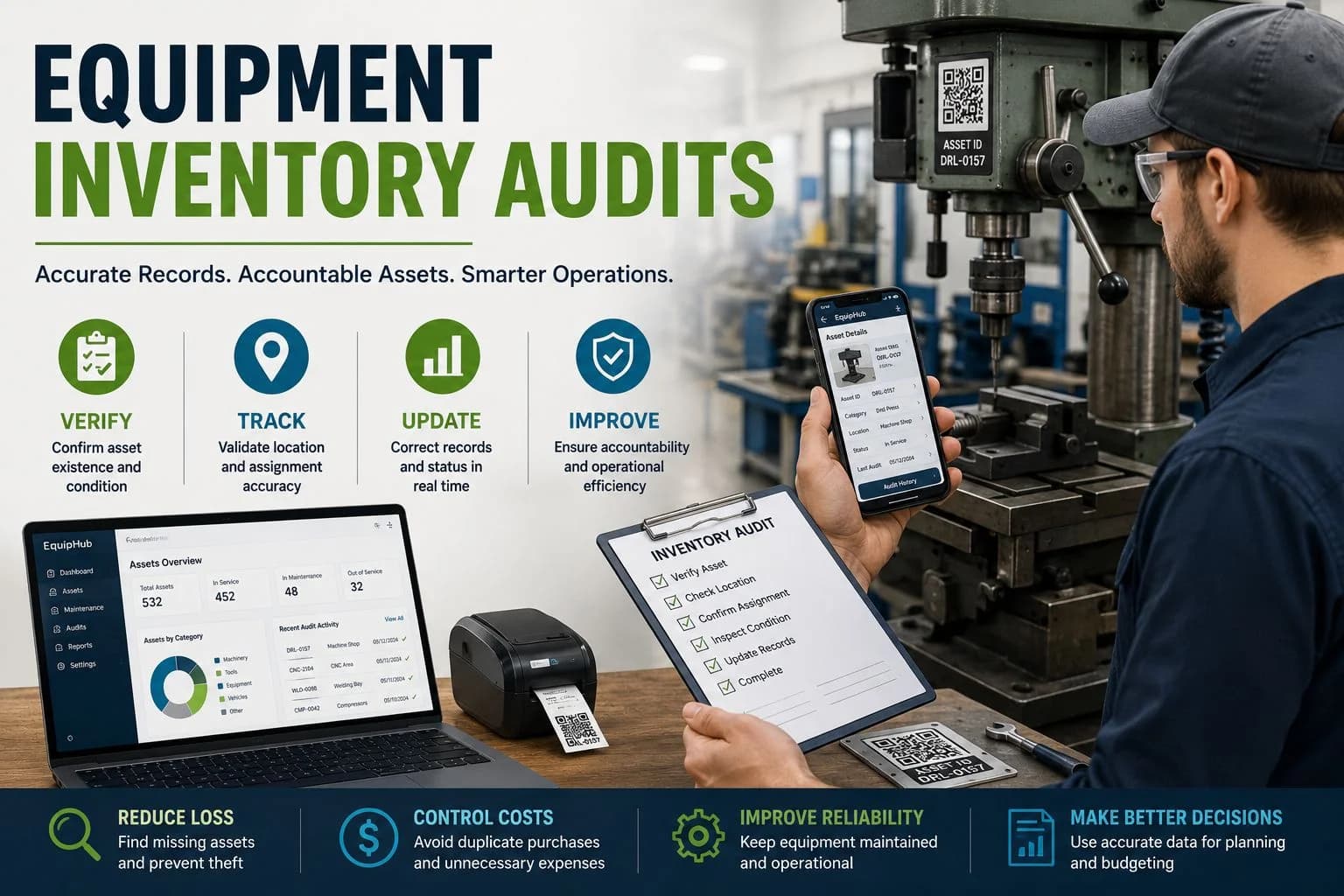
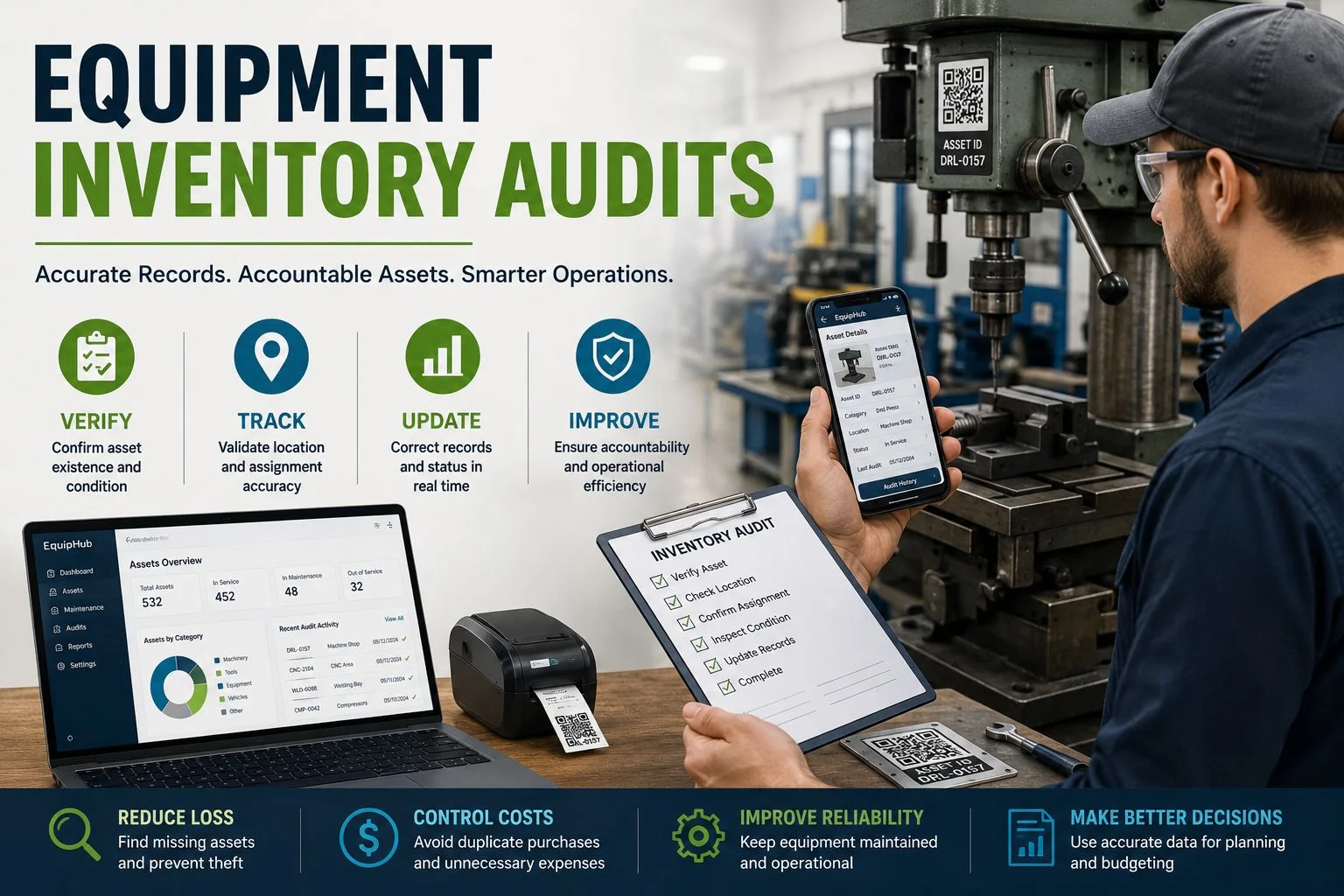
An equipment inventory audit is the process of physically verifying equipment and comparing it against recorded inventory data. Audits help businesses identify missing assets, correct inaccurate records, improve accountability, and maintain accurate equipment inventories.
Whether you manage construction equipment, manufacturing machinery, medical devices, landscaping tools, vehicles, or office assets, regular inventory audits are an essential component of effective asset management.
This guide explains why equipment inventory audits matter and provides a step-by-step process for conducting successful audits.
What Is an Equipment Inventory Audit?
An equipment inventory audit is a systematic review of physical assets to verify that inventory records accurately reflect reality.
The process typically involves:
- Locating physical equipment
- Verifying asset information
- Confirming ownership and assignment
- Checking asset condition
- Updating inventory records
- Identifying discrepancies
The goal is to ensure that your equipment database remains accurate and reliable.
Why Equipment Inventory Audits Are Important
Many organizations assume their inventory records are accurate until an audit reveals otherwise.
Common issues discovered during audits include:
- Missing equipment
- Duplicate records
- Incorrect locations
- Assets assigned to the wrong employees
- Retired equipment still listed as active
- Unrecorded purchases
- Inaccurate maintenance records
Regular audits help prevent these issues from accumulating over time.
Benefits of Equipment Inventory Audits
Improved Inventory Accuracy
Accurate inventory data is essential for making informed business decisions.
Audits help ensure:
- Asset counts are correct
- Locations are current
- Assignments are accurate
- Equipment statuses are up to date
Reliable data improves operational efficiency and reporting.
Reduced Equipment Loss
One of the most common audit discoveries is missing equipment.
Audits help organizations:
- Identify lost assets
- Detect unauthorized transfers
- Improve accountability
- Reduce theft opportunities
The sooner discrepancies are discovered, the easier they are to investigate.
Better Maintenance Management
Equipment maintenance depends on accurate inventory records.
Audits help verify:
- Equipment still in service
- Maintenance schedules
- Inspection requirements
- Warranty information
This ensures maintenance resources are allocated appropriately.
Improved Financial Reporting
Inventory records often support accounting and financial reporting processes.
Audits help verify:
- Asset values
- Depreciation schedules
- Asset ownership
- Retirement records
Accurate asset records contribute to more reliable financial statements.
Increased Accountability
When employees know assets are regularly audited, accountability improves.
Audits encourage:
- Proper asset handling
- Timely location updates
- Accurate assignments
- Better record keeping
This reduces errors and improves overall asset management practices.
How Often Should Equipment Audits Be Conducted?
Audit frequency depends on the value and volume of equipment.
Common schedules include:
Monthly Audits
Best for:
- High-value assets
- Frequently moved equipment
- Critical operational equipment
Quarterly Audits
Best for:
- Medium-sized inventories
- Multiple departments
- Growing organizations
Annual Audits
Best for:
- Full inventory verification
- Financial reporting requirements
- Compliance reviews
Many organizations use a combination of all three approaches.
Preparing for an Equipment Inventory Audit
Preparation significantly improves audit efficiency.
Before beginning:
Review Existing Records
Verify inventory data includes:
- Asset IDs
- Equipment descriptions
- Serial numbers
- Locations
- Assigned personnel
- Status information
Incomplete records should be corrected before the audit begins.
Define Audit Scope
Determine:
- Which assets will be audited
- Which locations will be included
- Who will participate
- Audit timeline
- Reporting requirements
A clearly defined scope prevents confusion during the audit process.
Organize Audit Teams
Depending on inventory size, audits may involve:
- Asset managers
- Operations personnel
- Department supervisors
- Inventory specialists
Assign clear responsibilities before the audit starts.
Step 1: Verify Asset Identification
Each asset should have a unique identifier.
Examples include:
- Asset tags
- Barcodes
- QR codes
- Serial numbers
Auditors should verify:
- Asset tag exists
- Tag matches inventory records
- Asset information is correct
Missing or damaged labels should be replaced immediately.
Step 2: Verify Physical Location
One of the primary goals of an audit is confirming asset location.
Questions to verify:
- Is the asset where records indicate?
- Has it been transferred?
- Is it currently assigned?
- Is it stored properly?
Location discrepancies should be documented and corrected.
Step 3: Verify Asset Condition
Audits provide an excellent opportunity to evaluate equipment condition.
Typical condition ratings include:
- Excellent
- Good
- Fair
- Poor
- Out of Service
Documenting condition helps organizations plan maintenance, repairs, and replacements.
Step 4: Verify Ownership and Assignment
Confirm:
- Responsible employee
- Department ownership
- Project assignment
- Job site assignment
Assignment records should reflect current operational reality.
Unassigned equipment should be reviewed to determine proper ownership.
Step 5: Verify Asset Status
Equipment status should accurately reflect current usage.
Common statuses include:
- Active
- Available
- Assigned
- In Maintenance
- Retired
- Lost
- Pending Disposal
Incorrect statuses can create confusion and lead to poor decision-making.
Step 6: Identify Missing Assets
Missing assets are often the most important audit finding.
When equipment cannot be located:
- Verify last known location
- Review assignment records
- Contact responsible personnel
- Review transfer history
- Investigate potential loss or theft
Missing assets should be documented and tracked until resolved.
Step 7: Update Inventory Records
After verification is complete:
- Correct locations
- Update assignments
- Modify statuses
- Record condition changes
- Remove retired assets
- Add missing records
Inventory systems should immediately reflect audit findings.
Common Audit Findings
Most audits uncover at least some discrepancies.
Common findings include:
Incorrect Locations
Equipment moved without updating records.
Missing Asset Tags
Labels damaged or removed.
Duplicate Records
Multiple records for the same asset.
Unrecorded Equipment
Assets purchased but never added to inventory.
Retired Assets Still Listed
Disposed equipment remaining in active records.
Missing Equipment
Assets that cannot be located.
Best Practices for Successful Audits
Use Standardized Procedures
Every audit should follow the same process.
Consistency improves accuracy and reporting.
Audit High-Value Assets More Frequently
Not all equipment carries the same risk.
Prioritize:
- Heavy machinery
- Specialized equipment
- Vehicles
- High-cost assets
More frequent verification reduces risk.
Keep Detailed Documentation
Document:
- Audit date
- Personnel involved
- Findings
- Corrections made
- Outstanding issues
Historical audit records provide valuable insights over time.
Use Technology
Barcode and QR code systems can significantly improve audit speed and accuracy.
Benefits include:
- Faster verification
- Reduced manual entry
- Improved record accuracy
- Real-time updates
Technology simplifies the entire audit process.
Equipment Inventory Audit Checklist
A successful audit should verify:
- Asset ID
- Equipment description
- Serial number
- Physical location
- Assigned employee
- Department ownership
- Condition
- Status
- Maintenance information
- Inventory record accuracy
Using a standardized checklist helps ensure consistency.
Conclusion
Equipment inventory audits are essential for maintaining accurate records and protecting business assets. By regularly verifying equipment locations, assignments, conditions, and statuses, organizations can reduce losses, improve accountability, and make more informed operational decisions.
An effective audit program strengthens asset management processes and ensures inventory records remain reliable throughout the equipment lifecycle. Regular audits may require time and effort, but the benefits far outweigh the costs, especially for organizations that rely heavily on equipment to support daily operations.