
guide
Equipment Financing Requirements: What to Prepare Before You Apply
Learn the documents, qualifications, and planning details businesses should prepare before applying for equipment financing.
Introduction
Equipment financing can help businesses purchase machinery, vehicles, tools, technology, and other assets without paying the full cost upfront. But financing applications move faster when the borrower is prepared.
Lenders want to understand the business, the equipment, the repayment ability, and the value of the asset being financed. Missing documents or unclear financial information can delay approval or limit available options.
This guide explains common equipment financing requirements and how businesses can prepare before applying.
What Is Equipment Financing?
Equipment financing is a funding arrangement used to acquire business equipment.
It may include:
- Equipment loans
- Finance leases
- Operating leases
- Vendor financing
- Lines of credit
- Sale-leaseback arrangements
The equipment itself often serves as collateral, but lenders still review the borrower's financial strength.
Why Requirements Vary
Not every financing application is evaluated the same way.
Requirements may depend on:
- Equipment type
- Purchase price
- Business age
- Credit history
- Industry
- Down payment
- Loan or lease structure
- New or used equipment status
Heavy equipment, vehicles, and specialized machinery may require additional documentation.
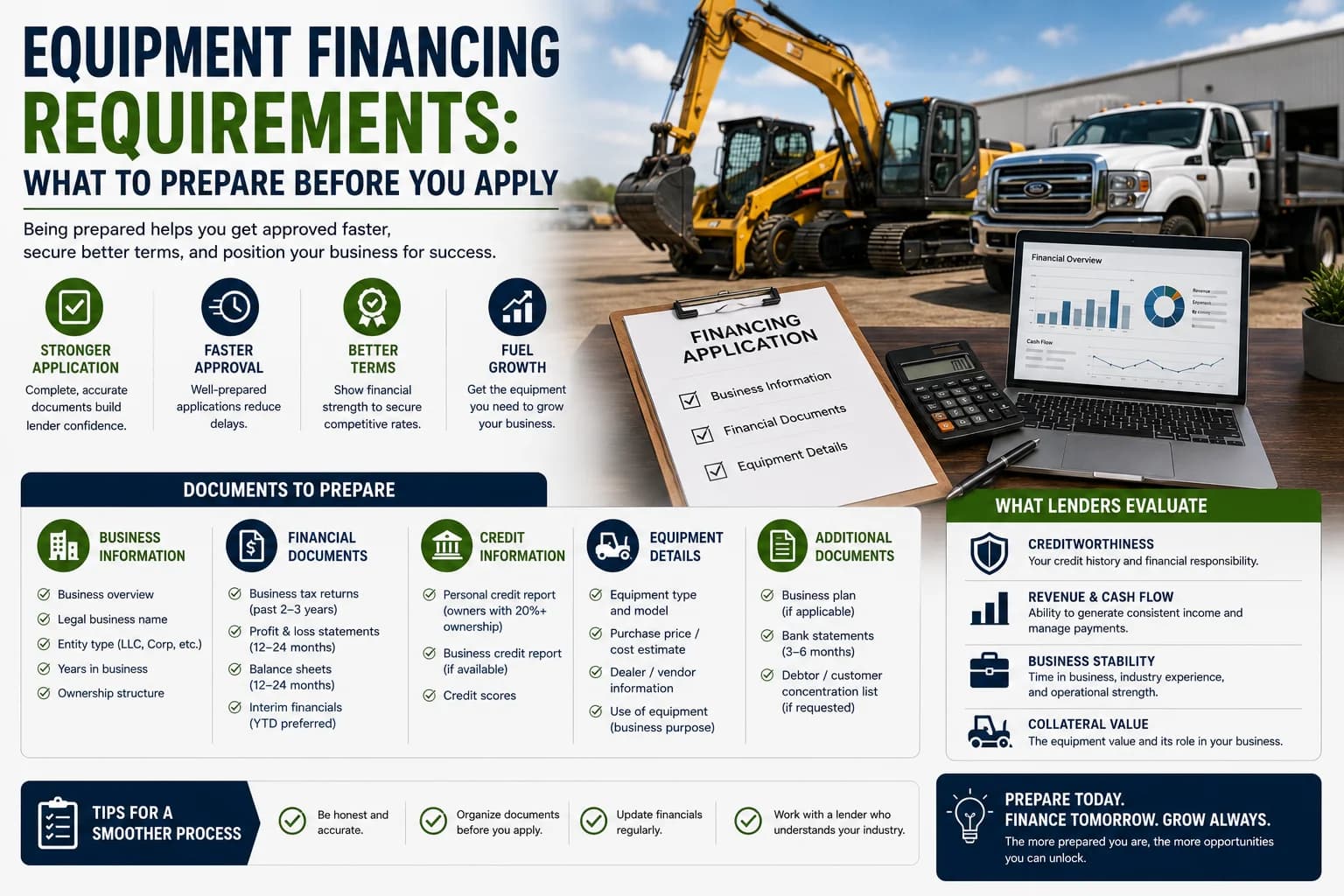
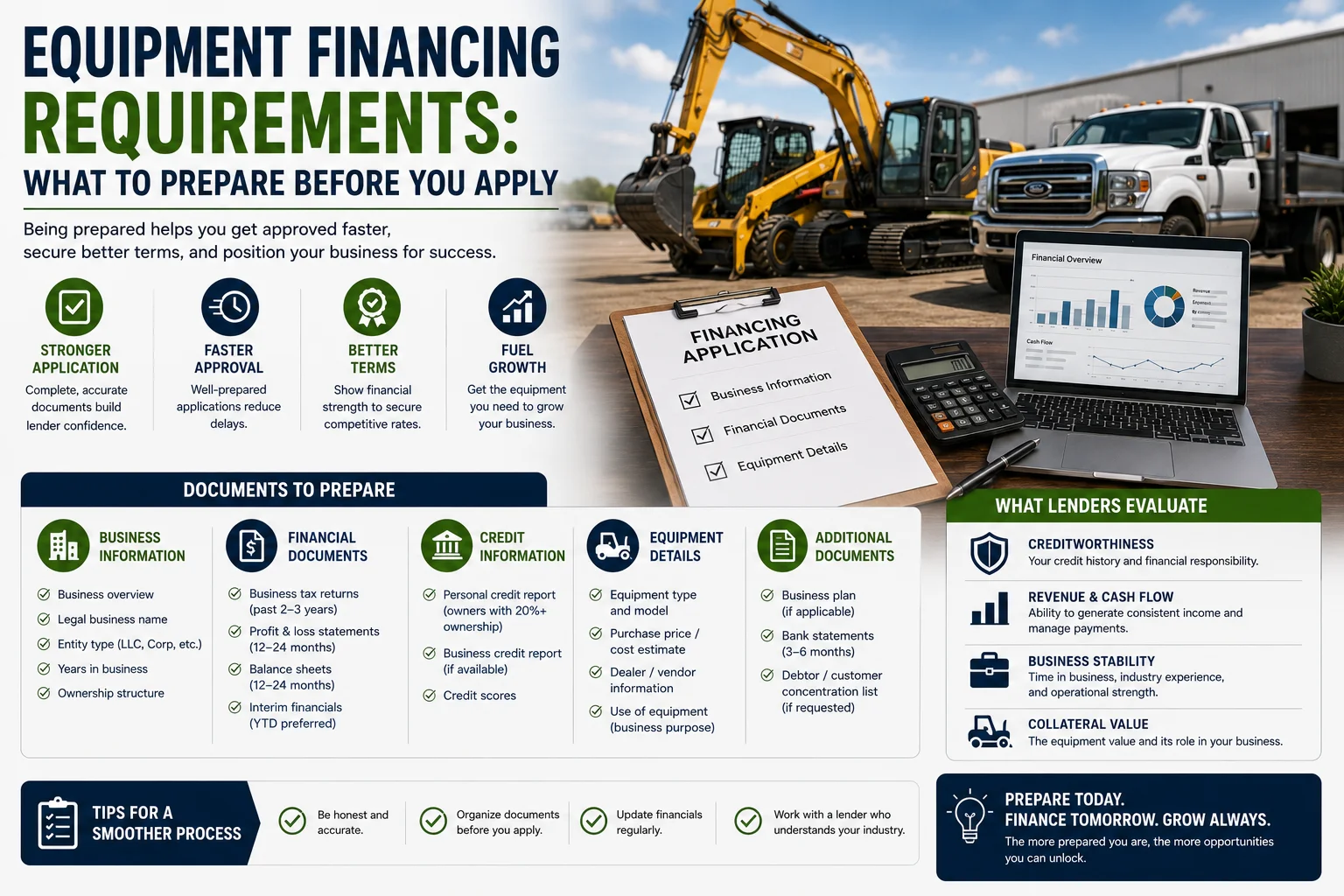
Common Documents Lenders Request
Most lenders request a core set of documents.
Common requirements include:
- Business application
- Equipment quote or invoice
- Business tax returns
- Bank statements
- Financial statements
- Ownership documents
- Driver's license or identification
- Articles of organization or incorporation
- Proof of insurance
Newer businesses may also need personal financial information or a personal guarantee.
Business Financial Records
Lenders need to verify the business can afford payments.
Useful records include:
- Profit and loss statements
- Balance sheets
- Cash flow statements
- Recent bank statements
- Existing debt schedules
- Tax returns
Clean, current financial records improve confidence and speed up review.
Equipment Information
The asset being financed matters.
Prepare:
- Equipment description
- Manufacturer
- Model
- Serial number if available
- New or used status
- Purchase price
- Vendor information
- Expected use
- Estimated useful life
For used equipment, lenders may ask about condition, hours, mileage, or appraisal value.
Credit Requirements
Lenders may review both business and personal credit.
They often evaluate:
- Payment history
- Existing debt
- Credit utilization
- Public records
- Time in business
- Prior financing history
Stronger credit may support better rates, lower down payments, or longer terms.
Down Payment Expectations
Some equipment financing requires a down payment.
Down payment size may depend on:
- Borrower strength
- Equipment age
- Asset resale value
- Loan amount
- Industry risk
- Lender policy
Many businesses should plan for at least some cash contribution, especially for used or specialized equipment.
Insurance Requirements
Financed equipment usually needs insurance.
Lenders may require:
- Proof of coverage
- Loss payee endorsement
- Liability coverage
- Physical damage coverage
- Updated policy documents
Insurance protects both the business and the lender if the equipment is damaged or lost.
How to Improve Approval Odds
Before applying:
- Organize financial records
- Resolve outstanding tax or legal issues
- Prepare a clear equipment quote
- Show how the asset supports revenue or operations
- Maintain stable bank balances
- Avoid taking on unnecessary debt
- Be realistic about payment size
A strong application tells a clear story about why the equipment is needed and how it will be paid for.
Common Application Mistakes
Avoid these issues:
Incomplete Documents
Missing records delay underwriting.
Unclear Equipment Purpose
Lenders want to know how the asset supports the business.
Weak Cash Flow Planning
Payments should align with revenue timing.
Ignoring Insurance
Insurance requirements can delay funding if handled late.
Applying Before Records Are Ready
Preparation improves the process.
Financing Readiness Checklist
Before applying, gather:
- Equipment quote
- Business tax returns
- Recent bank statements
- Financial statements
- Ownership documents
- Insurance contact
- Down payment plan
- Current debt list
- Business purpose summary
- Maintenance and storage plan
Being prepared helps lenders evaluate the deal more quickly.
Conclusion
Equipment financing requirements vary by lender, asset, and borrower profile, but preparation always helps. By organizing financial records, equipment details, insurance information, and business justification before applying, companies can improve approval odds and reduce delays.
The strongest financing applications show both the value of the equipment and the business's ability to manage repayment responsibly.