
guide
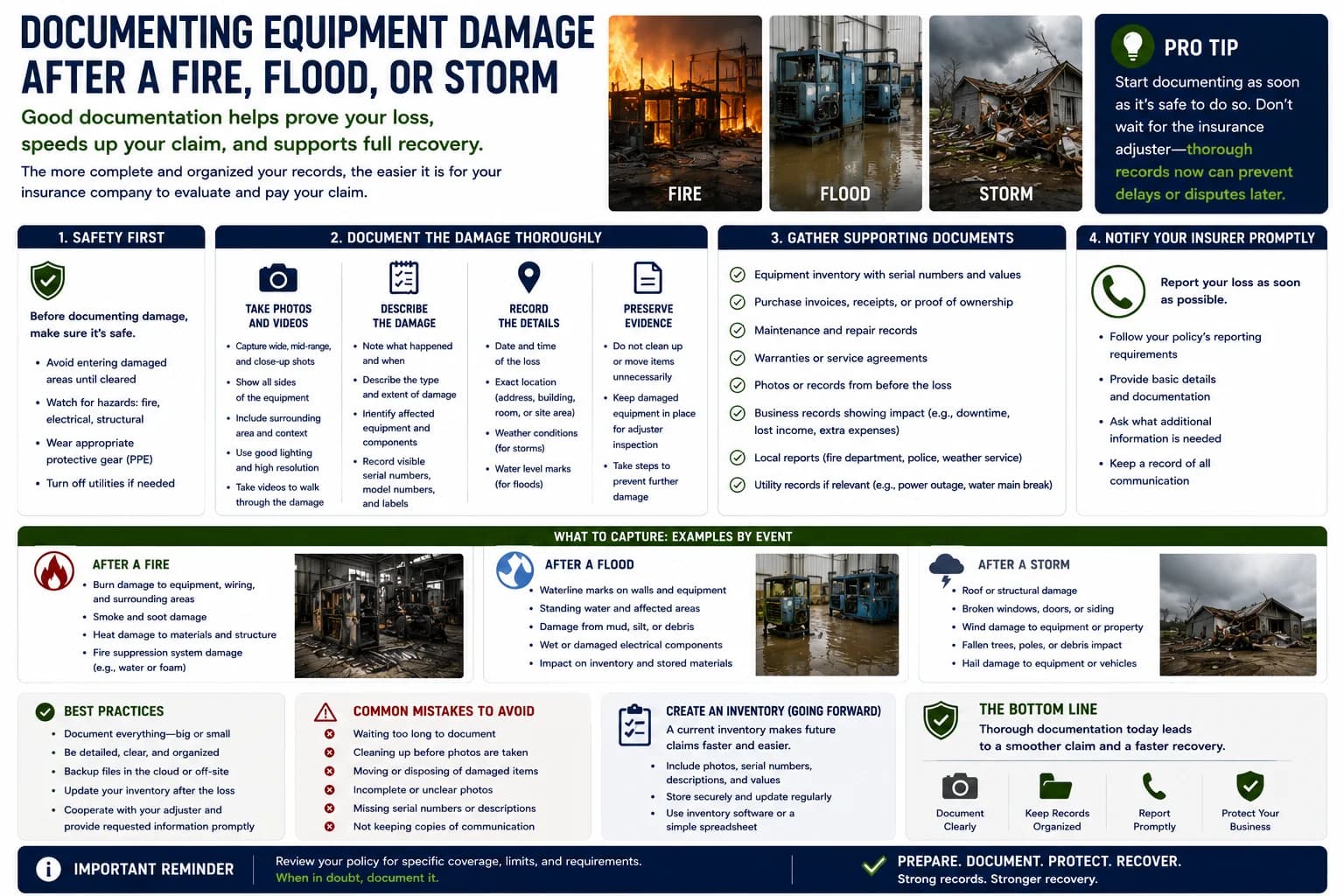
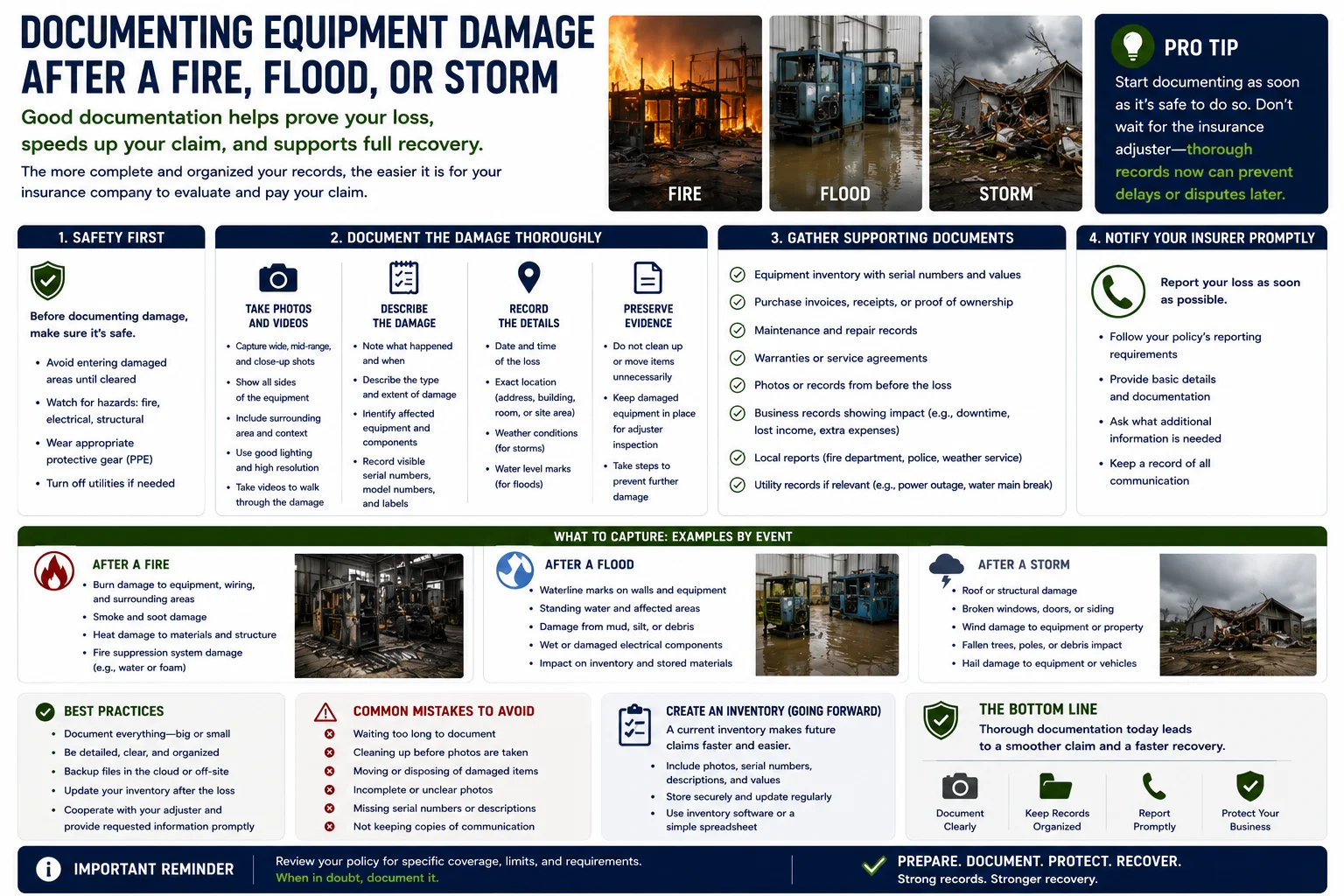
Documenting Equipment Damage After a Fire, Flood, or Storm
Learn how to safely document equipment damage, preserve evidence, track expenses, and organize records after a fire, flood, windstorm, or severe weather event.
Introduction
Fire, flood, wind, hail, lightning, and severe storms can damage multiple assets at once. The scene may be unsafe, equipment may continue deteriorating, and business owners may face pressure to clean up quickly.
Careful documentation helps preserve evidence while the business protects people, prevents additional damage, and begins recovery.
Safety comes first. Follow emergency authorities and insurer instructions. Flood and other catastrophe coverage varies. This article is general information, not insurance or legal advice.
Address Safety Before Documentation
Do not enter an unsafe building or approach damaged electrical, fuel, structural, or pressure systems.
Before documenting:
- Follow fire department or emergency instructions
- Shut down utilities only when authorized
- Use qualified professionals
- Keep employees away from hazards
- Wear appropriate protective equipment
- Watch for contamination or unstable structures
Photographs are never worth risking injury.
Notify the Insurer Promptly
Contact the insurer or agent as soon as practical.
Ask:
- What immediate steps are required?
- Can cleanup begin?
- Should equipment remain in place?
- Which vendors may be used?
- What expenses should be tracked?
- Will an adjuster inspect the site?
Record the claim number and contact details.
Photograph the Overall Scene
Begin with wide photos that show:
- Building or job-site location
- Equipment positions
- Water lines
- Debris
- Roof or wall damage
- Burn areas
- Fallen trees
- Access points
Wide images provide context for close-up equipment photos.
Photograph Each Asset
For every damaged asset, capture:
- Full equipment view
- Damage from multiple angles
- Serial plate
- Asset tag
- Attachments
- Controls and electrical components
- Water, soot, heat, or impact damage
- Meter reading when visible
Match the photos to the asset ID in a written inventory.
Create a Damage Inventory
Record:
- Asset ID
- Equipment description
- Manufacturer and model
- Serial number
- Location
- Type of damage
- Apparent severity
- Current status
- Temporary action taken
Avoid declaring equipment a total loss unless a qualified person has made that determination.
Prevent Additional Damage
Policies may require reasonable steps to protect property from further loss.
Examples may include:
- Covering exposed equipment
- Moving assets from standing water
- Drying affected areas
- Securing the site
- Separating wet materials
- Stabilizing structures
Only take actions that are safe and permitted. Photograph conditions before and after emergency work.
Preserve Evidence
Do not discard damaged equipment, parts, or debris without authorization.
Preserve:
- Failed components
- Damaged wiring
- Filters or fluids when requested
- Control boards
- Burned parts
- Packaging or storage materials
The insurer, engineer, or investigator may need to inspect them.
Document the Cause Without Speculation
Record factual observations:
- Date and time
- Weather conditions
- Alarm or error messages
- Water source
- Witness statements
- Emergency response
- Utility interruption
Avoid guessing about the cause. Investigators may need to determine it.
Track Recovery Expenses
Keep receipts and invoices for:
- Emergency protection
- Water extraction
- Cleanup
- Equipment transport
- Storage
- Inspection
- Repair estimates
- Rentals
- Temporary power
- Replacement equipment
Separate expenses by asset or location when possible.
Fire, Flood, and Storm Documentation Checklist
Collect:
- Claim number
- Emergency reports
- Wide scene photos
- Asset-level photos
- Serial numbers
- Pre-loss photos
- Damage inventory
- Ownership records
- Repair estimates
- Replacement quotes
- Cleanup invoices
- Communication log
Back up all records outside the affected location.
Conclusion
Documenting equipment damage after a disaster requires a balance between safety, loss prevention, and evidence preservation. Wide scene photos, asset-level records, serial numbers, expense tracking, and clear communication help create an organized claim file.
The strongest preparation happens before the event through current equipment inventories, off-site records, and pre-loss photos.