
guide
Asset Tracking Best Practices: A Complete Guide for Businesses
Learn practical asset tracking best practices for identifying, labeling, assigning, maintaining, auditing, and managing business equipment.

Introduction
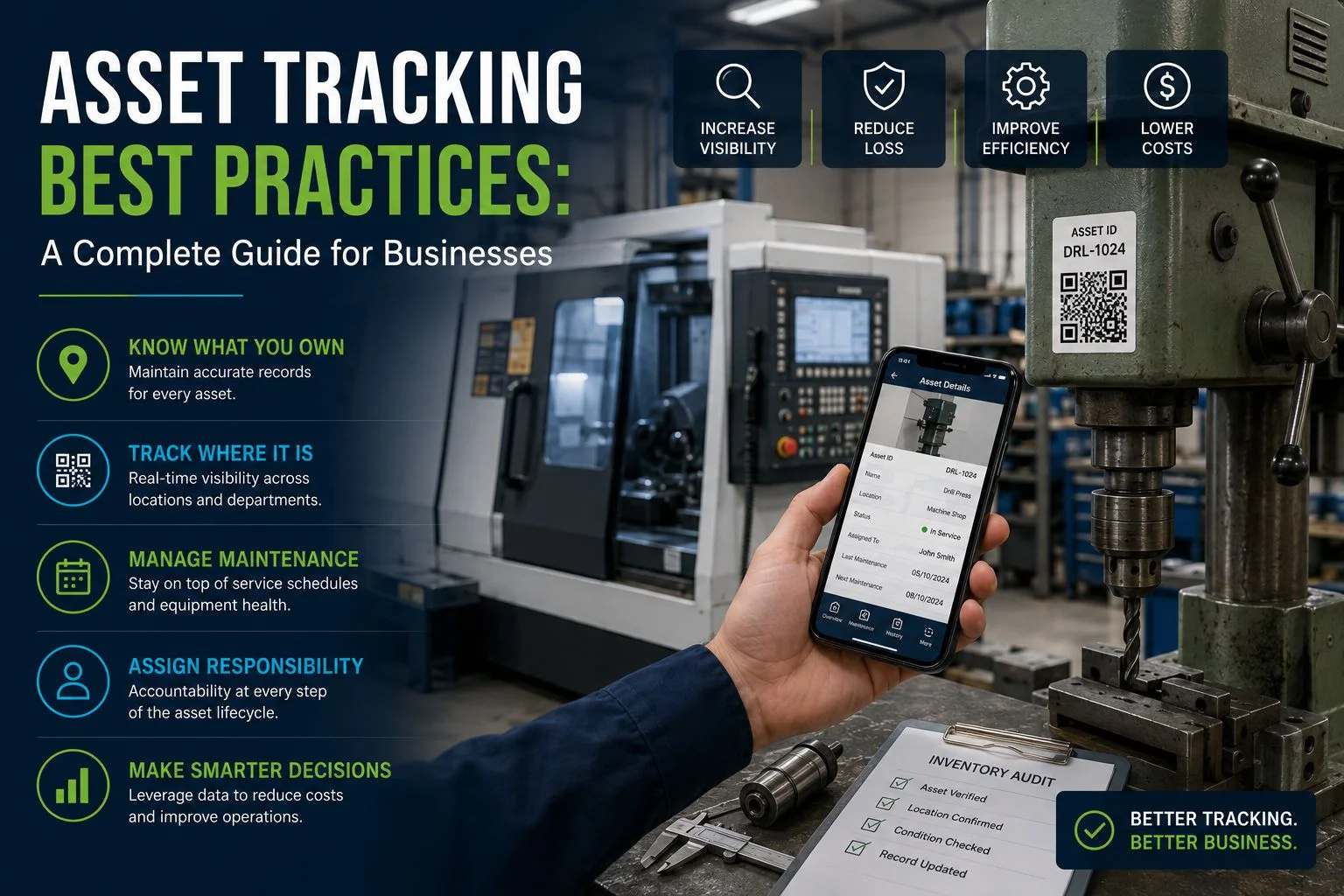
Whether your business manages ten pieces of equipment or thousands of assets across multiple locations, effective asset tracking is critical to operational efficiency. Equipment that cannot be located, maintained, or accounted for can lead to unnecessary purchases, increased downtime, compliance issues, and lost revenue.
Asset tracking is the process of monitoring physical assets throughout their lifecycle. By implementing proper tracking procedures, businesses gain visibility into asset locations, usage, maintenance history, ownership, and overall performance.
This guide covers asset tracking best practices and provides practical steps businesses can take to improve accountability, reduce losses, and maximize the value of their equipment investments.
What Is Asset Tracking?
Asset tracking is the process of recording and monitoring equipment, tools, machinery, vehicles, and other business assets.
An effective asset tracking system helps answer important questions:
- What assets do we own?
- Where are they located?
- Who is responsible for them?
- What condition are they in?
- When were they last serviced?
- What is their current value?
Without accurate tracking, organizations often struggle with missing equipment, duplicate purchases, maintenance delays, and poor decision-making.
Why Asset Tracking Matters
Many businesses underestimate the true cost of poor asset management.
Common problems include:
- Lost equipment
- Unnecessary equipment purchases
- Missed maintenance schedules
- Reduced productivity
- Increased downtime
- Compliance risks
- Inaccurate inventory records
Even small organizations can lose thousands of dollars annually due to inadequate asset tracking processes.
Implementing a structured tracking program improves visibility and accountability throughout the organization.
Create a Unique Asset Identification System
Every asset should have a unique identifier.
Examples include:
- Asset-0001
- EQ-10025
- TRK-0012
- CNC-0045
The identifier should remain with the asset throughout its entire lifecycle.
Avoid using descriptions as identifiers.
For example:
Bad:
- Red Forklift
- Large Generator
Good:
- FL-0007
- GEN-0015
Unique identifiers eliminate confusion and simplify record keeping.
Label Every Asset
Asset labels create a direct connection between physical equipment and digital records.
Common label types include:
Barcode Labels
Traditional barcodes are affordable and easy to implement.
Advantages:
- Low cost
- Easy to print
- Fast scanning
Disadvantages:
- Limited data capacity
- Must be scanned directly
QR Code Labels
QR codes can store significantly more information.
Advantages:
- More data capacity
- Easy smartphone scanning
- Supports links to digital records
Disadvantages:
- Slightly larger labels
- Can become difficult to scan if damaged
For most modern businesses, QR codes provide greater flexibility and scalability.
Standardize Asset Data
One of the most common asset management mistakes is inconsistent data entry.
Every asset record should contain standardized information.
Recommended fields include:
- Asset ID
- Equipment name
- Category
- Manufacturer
- Model number
- Serial number
- Purchase date
- Purchase cost
- Current location
- Assigned employee
- Warranty information
- Maintenance schedule
- Asset status
Standardized records improve reporting and decision-making.
Track Asset Locations
Knowing where equipment is located is one of the primary goals of asset tracking.
Location tracking should include:
- Facility
- Building
- Department
- Room
- Job site
- Vehicle assignment
For businesses with multiple locations, location tracking becomes essential for reducing equipment loss and improving utilization.
Location updates should be recorded whenever assets are moved.
Assign Ownership and Responsibility
Assets should always have a designated responsible party.
Examples include:
- Employee
- Department
- Project manager
- Site supervisor
When accountability is assigned, assets are less likely to be lost, damaged, or forgotten.
Assignment records should include:
- Assigned date
- Responsible individual
- Expected return date
- Condition at assignment
This creates a clear chain of custody.
Maintain Accurate Asset Statuses
Every asset should have a current status.
Examples:
- Active
- Available
- Assigned
- In Maintenance
- Out of Service
- Retired
- Lost
Accurate status tracking helps managers understand equipment availability and operational readiness.
Record Maintenance History
Asset tracking is not just about location - it is also about condition.
Every maintenance activity should be documented.
Examples include:
- Inspections
- Repairs
- Oil changes
- Calibration
- Part replacements
- Warranty work
Maintenance records help organizations:
- Extend equipment life
- Reduce downtime
- Identify recurring issues
- Support warranty claims
- Improve compliance
Detailed service history often increases resale value as well.
Conduct Regular Asset Audits
Even the best tracking systems require verification.
Physical asset audits help identify:
- Missing equipment
- Incorrect locations
- Duplicate records
- Unused assets
- Data inaccuracies
Many organizations perform audits:
- Monthly
- Quarterly
- Annually
High-value equipment may require more frequent verification.
Regular audits improve data accuracy and accountability.
Monitor Asset Utilization
Tracking ownership and location is only part of the equation.
Businesses should also measure how effectively assets are being used.
Questions to ask:
- How often is the asset used?
- Is it generating value?
- Is it underutilized?
- Should it be reassigned?
- Should it be sold?
Utilization data helps organizations maximize return on investment and reduce unnecessary purchases.
Establish Asset Lifecycle Procedures
Asset tracking should support the entire equipment lifecycle.
Procedures should exist for:
Acquisition
Record all asset details immediately after purchase.
Deployment
Assign ownership and location.
Maintenance
Track inspections, repairs, and servicing.
Transfers
Document location and responsibility changes.
Retirement
Record disposal, sale, donation, or recycling.
Consistent procedures create reliable records throughout the asset's life.
Use Asset Management Software
Spreadsheets can work for small businesses, but they become difficult to manage as equipment inventories grow.
Asset management software helps organizations:
- Centralize records
- Track maintenance schedules
- Monitor assignments
- Generate reports
- Conduct audits
- Improve visibility
A centralized platform reduces administrative work while improving data accuracy.
Common Asset Tracking Mistakes
Avoid these common issues:
Incomplete Records
Missing information creates confusion and reduces reporting accuracy.
Inconsistent Naming
Different naming conventions lead to duplicate and inaccurate records.
Failure to Update Locations
Location data becomes useless if transfers are not recorded.
Ignoring Maintenance Records
Maintenance history is essential for lifecycle management.
Skipping Audits
Without audits, data accuracy gradually declines.
Best Practices Checklist
Successful asset tracking programs typically include:
- Unique asset IDs
- Asset labels on all equipment
- Standardized data fields
- Location tracking
- Ownership assignments
- Maintenance history records
- Regular audits
- Lifecycle procedures
- Centralized asset database
- Reporting and analytics
Organizations that consistently follow these practices gain better visibility, reduce equipment loss, and improve operational efficiency.
Conclusion
Effective asset tracking provides the foundation for successful equipment management. By implementing clear identification systems, maintaining accurate records, assigning responsibility, and conducting regular audits, businesses can reduce losses, improve productivity, and make more informed decisions.
Whether managing a small inventory of tools or a large fleet of equipment, strong asset tracking practices help ensure every asset delivers maximum value throughout its lifecycle.